
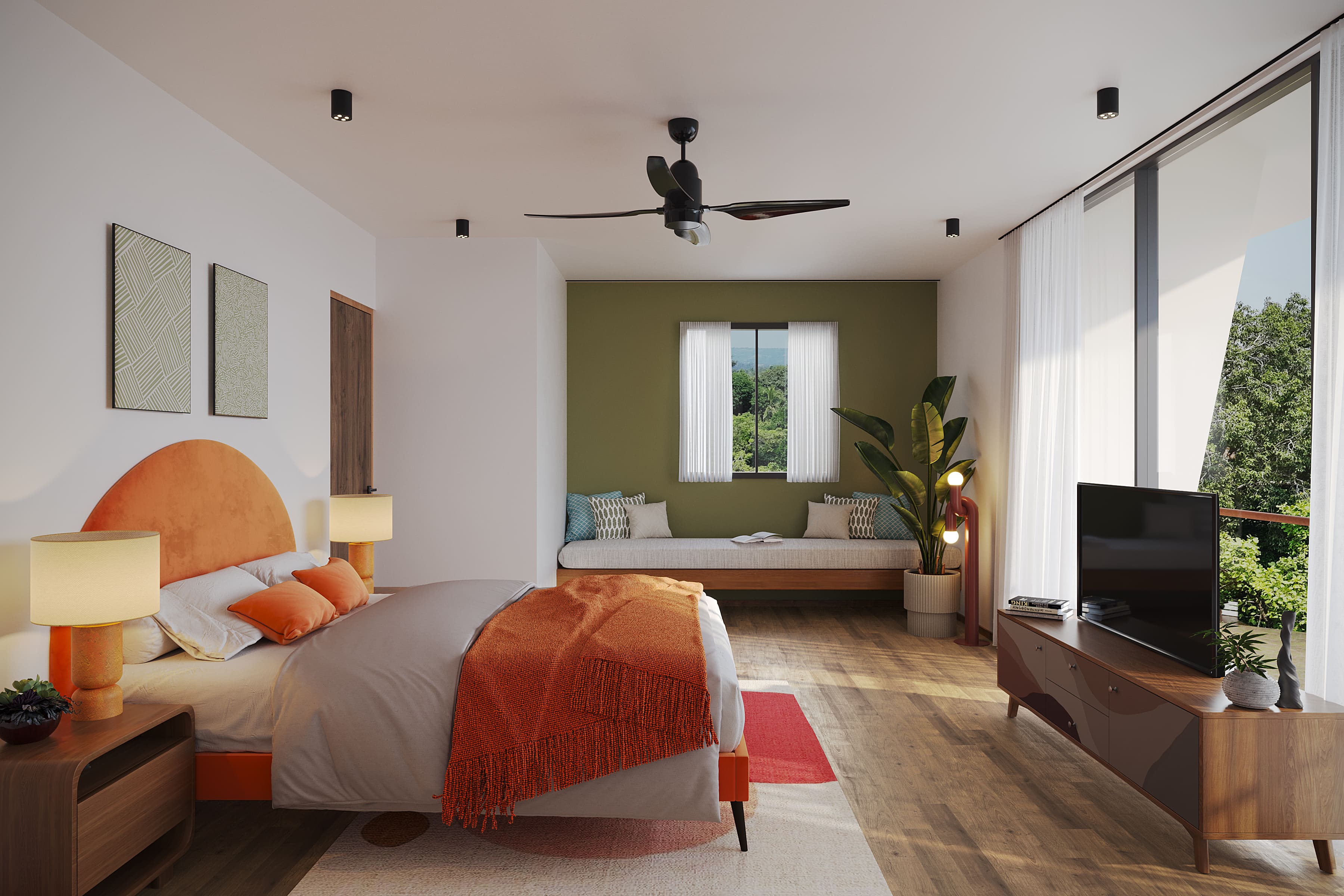
Branded Residences vs Independent Luxury Villas in Goa: What Are You Actually Paying For?
Most luxury buyers find themselves dicey while comparing two high-end homes in a similar market, where one carries a global hospitality or lifestyle brand and the other is fully independent. The pertinent question that follows: how do you determine which represents the better investment?
A branded residence integrates an established brand name, signature design standards, and centralized management into a residential property. In markets like Goa, these developments promise institutional oversight, predictable service standards, and global recognition, often commanding a 20% to 40% premium over non-branded alternatives. But in a market increasingly defined by strategic asset allocation rather than impulse purchases, discerning buyers must look beyond the name. This article breaks down what that branded premium actually buys, the ongoing operational costs that persist after handover, and when an independent, professionally managed villa offers a more compelling ownership proposition.
What Entails a Branded Residence?
A branded residence is developed under an agreement with a hospitality or lifestyle brand, with the brand typically contributing its name, standards, design guidance and/or operational framework. The developer remains responsible for development and delivery. The precise ownership, service and management arrangements depend on the individual project.
It is important to note, though, that ownership means much more than just owning the real estate. It includes the services associated with the brand. A team of professionals in the building makes sure that all services (concierge, housekeeping, security, maintenance) are provided to the owners in line with the brand instructions. In order to protect the brand equity, the company enforces the standards of operations periodically through third-party audits and maintenance management.
Structurally, branded residences fall into two distinct execution formats:
One would be the hotel or resort co-located schemes. Here, homes are physically integrated within or sit immediately adjacent to a full-service hotel or resort. Homeowners share back-of-house infrastructure, dining establishments, spa facilities, and resort grounds, giving them immediate access to hotel amenities.
Second are standalone branded developments. In this type, residential enclaves are operated by a brand without an accompanying hotel. Dedicated amenities such as a private clubhouse, gym, and lounge are constructed solely for homeowners.
Globally, the sector is undergoing a clear structural shift. According to Savills Research, most branded residences are aligned with lifestyle brands, while, on the other hand, standalone branded residential projects are expected to rise from 8% to over 12% globally. Standalone projects account for a growing portion of the global development pipeline, driven by ultra-high-net-worth buyers seeking brand-enforced privacy and exclusive, residential-only environments without transient hotel guests.
Do Branded Residences Exist in Goa?
Goa has undergone a changeover from a localized market of vacation homes to a booming market for branded vacation properties. It was once known for its individual private homes, but now it is witnessing an influx of global hospitality giants and brands entering the luxury real estate space in North Goa due to rising land prices. The phenomenon is evident from the market arrival of many such projects. In the state, projects such as Marriott Residences have emerged that signify the arrival of branded residencies. Another example would be the Boheim x Abu Jani Sandeep Khosla villas that provide the true experience of a branded villa Goa.
Overall, this trend is seen across the prime holiday markets of India, such as Jaipur, Lonavala, and Nilgiris, where buyers prefer to buy properties that provide them with the benefits of institutional hospitality.
These developments serve as clear market evidence: national and international operators now view Goa not merely as a seasonal resort town, but as a legitimate institutional market for high-yield, branded residential real estate.
What Does the Premium Cost?
The cost incurred in association with a brand is decomposed into two distinct phases that include capital investment and the ongoing operational cost.
A. Capital amount
The trend seen in the relevant luxury markets suggests that branded properties achieve a capital premium when compared to non-branded homes situated in the same slice of the market. For India, targeted industry metrics show a capital premium noted above in this paper. Savills’ 2025 Global Brand Premium Study found an average branded-residence premium of 33% globally, rising to an average of 39% in resort markets. These are global averages rather than Goa-specific premiums, and actual premiums vary significantly according to location, brand, developer, product, and execution
B. Second is the perpetual operational layer
What is usually ignored by standard property evaluations is that brand premium is not just a one-off event. Branded ownership can involve brand-related service fees, management charges, reserve or FF&E contributions, refurbishment requirements, and rental-programme conditions, depending on the individual project and agreement.
In most cases, high HOA bills are generated that cover the staff, concierge, and upkeep of amenities. And there are certain FF&E costs that add up over time.
What Does the Premium Buy in Case of Branded?
In order to determine the reasons behind the money paid by the buyers before using the future opportunity, the operational value proposition has to be analyzed. By looking at it from a brand operator’s view, there are four main advantages of working under this business model:
Professional management and defined service standards
According to Savills, professional management, hassle-free maintenance, branding, and true “lock-up-and-go” capability are all main advantages of the branded ownership concept. For a villa owner living in Mumbai, Delhi, or Dubai who comes to Goa for just a number of visits during the year, this entire system is so convenient that it brings great peace of mind. Incorporated into a branded concept, one does not need to search for, train, and supervise local caretakers, pool maintenance guys or even security personnel.
structured rental programme
Branded residential schemes frequently offer fully integrated, professionally managed rental programs. By entering the pool, an owner places their property within the brand’s global distribution, marketing, and reservation engines. Hotel-backed loyalty programs drive guest acquisition, simplifying short-term luxury rentals.
Note on Returns: While access to a global booking engine is a structural benefit, actual gross rental income, net yield, and property appreciation vary significantly based on hyper-local demand, usage restrictions, operator revenue-share splits, high maintenance overheads, and local tax structures.
Resale depth and a diverse buyer pool
Hotels that have achieved global name recognition provide an instant indication of quality to future buyers of resale investments. When a resale property is being assessed by a buyer who is from another country or a different state, brand name significance removes the challenges associated with dealing with an unfamiliar local builder. A wider recognition of brand names can improve the visibility and liquidity of resale units, even if profits in the long run will ultimately depend on the inherent quality level of a property, how well it is maintained, and general economic conditions at a given period of time.
Predictability
The brand's manuals instruct everything from air conditioning service times to the quality of water purification systems used and the number of threads in bed sheets. This kind of operational reliability helps a first-time luxury buyer in Goa who doesn’t know any local contractor, architect, or lawyer to feel secure in his investment.
What the Premium Doesn't Automatically Buy?
A brand can provide operational standards, design oversight, services, and recognition, but the brand name does not replace independent due diligence on title, approvals, structural execution, land conditions, or the suitability of the architecture for its particular site and climate.
The agreement for brand licensing is a business contract and does not equate to providing a guarantee of legal ownership of the property. Therefore, the fact that we are in Goa does not cancel out the need for independent due diligence about ownership, conversion approvals, CRZ approvals (if required), and local approvals from the village panchayat. Next, hotel brands check the aesthetics of the surfaces, layout, and finishing plans, but they do not act as structural engineers or on-site supervisors during the construction.
In general, a global brand standard is made for greater consistency, but it does not mean that the villa will be built to suit the local climate or that the foundation will be designed for the heavy rains in North Goa during the monsoon season.
In the end, buyers must scrutinize operational restrictions. Branded schemes typically enforce stringent rules regarding home alterations, personal furniture selection, owner occupancy limits during peak seasons, and forced interior refurbishments.
If the Residence Depends on a Hotel or Resort Component, What Should the Buyer Check?
If the residential proposition depends materially on a hotel or resort, buyers should establish the construction and operational status of the hotel, phasing, promised shared amenities, ownership/operation of those amenities, brand agreement duration, and what happens contractually if the hotel or brand relationship changes.
One element to note here is that hospitality brands prefer the hotel component completed and fully operational before residential keys are handed over to safeguard guest and brand standards.
If the hotel component is delayed, stalled, or altered, residential owners may find themselves living in a partial construction zone without access to promised amenities. Buyers of today, evaluating co-located projects, should perform thorough due diligence on four key grounds.
First is relative to the phasing. Is the commercial hotel being built simultaneously with the residences, or is it phased later? What enforceable contractual remedies exist if the hotel is delayed? All these clarifications have to be there. Second would be to tally the infrastructural promises. The buyer should check whether the central amenities (such as power back-up, water treatment, central pools, and dining facilities) are owned and operated by the residential HOA or the hotel entity. Next would be the brand agreement term and termination provisions. Buyers should note the duration of the brand’s management license. And the final one would be to have clarity on what services would change if the ties between brand and developer change. Check whether the HOA retains the legal hold and operational capability to hire an independent property manager or not.
What an Independent Luxury Villa Can Offer Instead?
Opting for an independent luxury villa in Goa means the buyer is synonymous with potentially greater site-specific design, greater personalisation and ownership flexibility, and the ability to choose the level and form of professional management.
A. Exceptional Architectural and Design Freedom
Luxury developers are not required to comply with corporate design policies and can therefore focus all their efforts on site-compatible architecture. Houses can be built using local materials such as laterite and teak in North Goa, where the houses age well naturally in the tropical monsoon season. The design of the houses can include open neo-tropical design, a bridge-like construction set at height, and natural climate control, which caters to the needs of the micro-topography of individual sites in Pilerne and Sangolda. Owners are free to furnish and modify their houses without any corporate agreement.
B. Professional Home Care Without Corporate Overhead
The choice of an independent villa does not equal self-management. It can still have professional hospitality, home management, and optional rental management without requiring participation in a hotel-branded operating model.
A prime example of this model in North Goa is our Anokha Sands. Under the umbrella of Anokha Estates, it’s a dedicated boutique hospitality and home management division created specifically to support villa ownership. Designed to offer seamless, "lock-up-and-leave" capability, it provides comprehensive property oversight in the absence of the owner.
From personalised concierge services, pre-arrival home preparation, guest welcome and check-in, housekeeping, home upkeep and maintenance, to chef and lifestyle services, vendor coordination and day-to-day assistance, every aspect is thoughtfully managed. For owners who wish to generate rental income, Anokha Sands also offers a fully managed and curated rental programme, covering marketing, guest screening, reservations, hospitality, housekeeping, concierge services and ongoing property care.
C. The Management Trade-Off
The biggest trade-off in the non-branded model is governance. The consistency of the services is dependent on the operational team of the developer or the management partner chosen by him, rather than relying on an international brand manual. Buyers must scrutinize the developer's track record, inspect existing operational communities, and evaluate service level agreements (SLAs) very thoroughly before buying.
Comparing the Two Models
To evaluate how these models, compare across key parameters, consider the following structural matrix:
|
Parameters |
Branded residence |
Non-branded luxury villa |
|
Brand recognition |
Global hospitality or lifestyle brand |
Developer and project reputation |
|
Management |
Typically structured through the brand or operator |
Can be self-managed or professionally managed |
|
Services |
Defined brand-led services |
Vary; may include concierge, housekeeping, maintenance coordination and complete home management |
|
Design |
Brand standards combined with the project's design |
Might have greater site-specificity, individuality and personalisation |
|
Rental approach |
Typically structured or operator-led |
Owner-controlled or professionally managed |
|
Ongoing costs |
May include service charges plus applicable brand and management costs |
Depends on community costs and the management or services selected by the owner |
|
Owner flexibility |
May be subject to brand, usage and rental rules |
Might offer greater flexibility |
|
Resale recognition |
Can benefit from international brand familiarity |
Depends more heavily on the developer, quality of the property, location and overall desirability |
|
Best suited to |
A buyer who values brand certainty, standardisation and integrated service |
A buyer who values individuality, flexibility and the ability to choose the level of professional management they require |
Comparing Total Cost of Ownership
Evaluating a real estate investment, whether in Goa or other high-growth markets, requires looking beyond the initial purchase price to consider the Total Cost of Ownership (TCO).
The TCO of a branded residence typically includes the base property price and an upfront brand premium, followed by ongoing expenses such as common area maintenance, brand licensing or management fees, and mandatory contributions to a reserve fund. In exchange, owners receive passive property management, integrated hospitality services, and a hands-off ownership experience.
In contrast, independent, professionally managed villas generally involve lower initial acquisition costs and a lower recurring overhead. This model offers owners greater control over annual operational budgets, design modifications, and property usage schedules.
Ultimately, determining which model offers better value depends on how the owner intends to use the home. Buyers should carefully evaluate acquisition prices, recurring charges, potential management or rental costs, usage restrictions, and the level of service provided over a realistic holding period.
Frequently Asked Questions (FAQs)
1. What is a branded residence?
Branded residential properties refer to properties that are built in partnership with a popular or well-known hospitality, design, or lifestyle brand. The branded entity is responsible for the following as part of its licensing agreement: granting permission to use the brand name, stipulating standards of design and architecture, appointing contractors for property management, and offering homeowners a variety of services like concierge, housekeeping, security, and so on.
2. Are there branded residences in Goa?
Goa is currently one of the hot spots for branded vacation residences. Some notable developments in the field include such well-known brands as Marriott Residences and designer collaborations with companies like Boheim x Abu Jani & Sandeep Khosla with Kunal Rawal. It is important to point out that unlike any designer spaces on the market, this particular type of ultra-luxury custom-made homes will have all the necessary adjustments made to suit the personal preferences of their owners.
3. How much extra do branded residences cost?
According to Savills Research, branded residences carry a global average price premium of approximately 33%, rising to 39% in resort destinations. India happens to rank among the top 10 countries to develop exceptional branded residences in prime cities like Mumbai, Hyderabad, Delhi NCR, and Bengaluru. For instance, the 450-unit Trump Tower branded residence in Kokapet, Hyderabad, is set to generate US$ 367 million in sales.
4. Is investing in branded residences in Goa a smart move?
The answer is not definite, as it totally relies on individual investors’ priorities, property location, efficiency factor of the operator, as well as the way that the property will be utilized. Branded residences have a string of activities such as organized management of the property, familiarity with its name, and availability of infrastructure for renting it out. Nevertheless, the high initial purchase price combined with constant fees connected with the brand could lower the net rental yields the property could bring to you. A good alternative could be a non-branded villa for rent, controlled by a property maintenance company that can give you similar levels of living and renting opportunities at a lower cost.
5. What is the difference between a branded residence and a serviced residence?
Serviced homes are usually offered as fully equipped lodging facilities that provide basic services associated with hotels, alongside the residence, that is operated by a locally operated company that does not have any related brand. The branded lodging place is associated with a famous, globally acknowledged brand that operates under strict guidelines provided by the brand and goes through continuous brand evaluations to ensure that it complies with quality standards introduced by the parent company.
6. Can you rent out a branded residence yourself?
This will depend on the conditions and requirements established by the developer of the property. Many branded residences require the property owner to use the brand’s official renting program to ensure compliance with the pricing policies and compliance with guest standards. Other branded residences allow leasing the apartment through other companies provided that they meet the strict operating conditions.
7. What happens to the branded residences if the hospitality company leaves?
The property gets stripped of all brand signage and IP, losing its affiliation. Subsequently, the residence is removed from the brand’s reservation engine, loyalty system, and rental pool. Depending on the Hotel Management Agreement (HMA), the HOA must either re-flag with another brand or contract an independent operator. On the other hand, owners lose brand-specific amenities, but recurring licensing fees cease. Resale values may adjust accordingly
Take the Next Step in Goa’s Luxury Real Estate
The choice between a branded residence and an independent luxury villa ultimately rests on how an owner intends to engage with their home. A branded residence offers an internationally standardized framework, turnkey convenience, and a globally recognized name, delivering a structured, hands-off experience in exchange for a higher capital outlay and ongoing brand obligations.
Conversely, an independent villa prioritizes architectural flexibility, personal discretion, and control over recurring costs, while still providing the operational ease required for modern long-distance ownership.
For buyers evaluating these two paths, determining the right choice requires weighing acquisition prices, long-term operational costs, and personal usage goals. If you are comparing these models and exploring independent, design-led villa ownership in Goa, speak with Anokha Estates to discover our bespoke residential projects and the comprehensive, professional management services available through Anokha Sands.


Similar Like This

Conversion Sanad in Goa: What Buyers Should Verify Before Purchase?
A Conversion Sanad refers to a specific document issued by the relevant Revenue Authority (specifically the Collector or...

Boutique Developer or Large Builder? What to Compare Before Buying a Goa Villa
Goa, as a coastal state, has witnessed unprecedented residential growth, driven by a high influx of HNIs and government ...

Beyond the Mopa Premium: The Three Things That Hold the Values of North Goa Villas
tbody, td, tfoot, th, thead, tr { border-color: white; border-style: solid; border-width: 1px; I...